

Delaware to Lose its Distinction as One of Only Three States Lacking a Medical School
- Sussex County Republican Committee

- Jun 6
- 3 min read
DE House - Republican Caucus
June 6, 2026
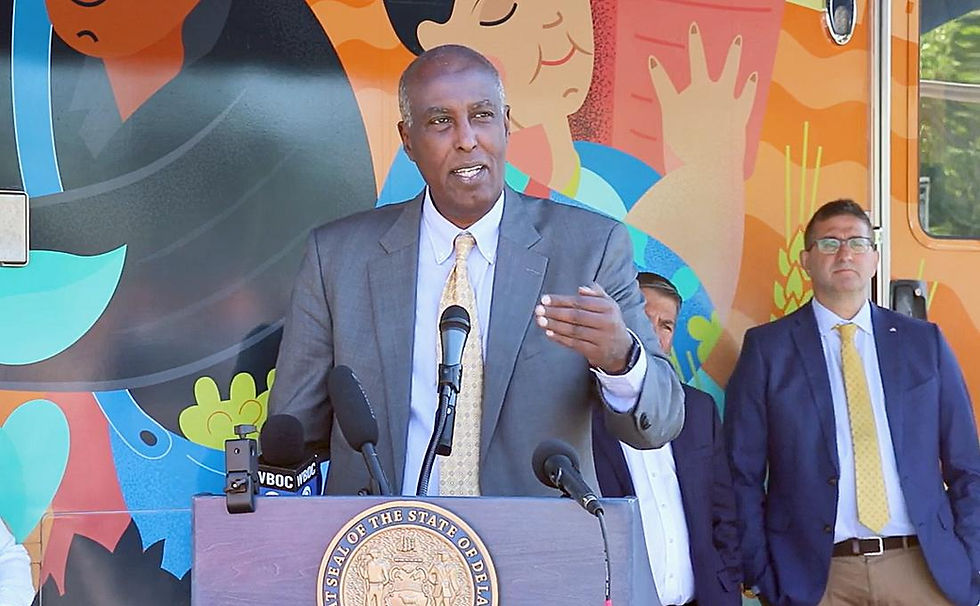
Earlier this week, Governor Matt Meyer announced a partnership with Thomas Jefferson University to establish a regional campus of the Sidney Kimmel Medical College, creating Delaware's first four-year medical school.
With the addition, Delaware will join 46 other states with a school certified to grant degrees for a Doctor of Medicine (M.D.) or Doctor of Osteopathic Medicine (D.O.).
The Delaware Medical School Consortium, consisting of Delaware-based academic institutions, health care systems, and the Sidney Kimmel Medical College, will collaborate to train and retain physicians in the First State.
Pre-clinical instruction will initially be based at the University of Delaware's main campus in Newark, while clinical education and training will reportedly occur within healthcare systems in Kent and Sussex counties, where the physician shortage is most acute.
Thomas Jefferson University beat out three other competitors that had submitted bids to partner with Delaware on the project.
Establishing and operating the school will not come cheaply, requiring $78 million in federal grant money over five years. The funding is part of a total allotment of $785 million that Delaware is receiving through the Rural Health Transformation Program in annual installments over five years. The federal initiative is designed to modernize and expand healthcare access across rural America to finance state-driven solutions in preventive care, infrastructure, and workforce development.
“We face the same [healthcare] workforce challenges as much of the country, but they are more severe here because we are growing faster and we’re aging faster than much of the rest of the country, and our workforce is not growing to meet that demand,” said Delaware Health Care Commission Chair Dr. Neil Hockstein. “For too long, we’ve relied on importing training physicians from elsewhere.”
While potentially increasing the number of doctors in Delaware was welcome news, the approach of creating a new medical school to accomplish the goal has been questioned.
Earlier this year, as reported by Spotlight Delaware, members of the budget-writing Joint Finance Committee noted that a more cost-effective solution may have been the expansion of an initiative Delaware has had in place for decades.
Under the Delaware Institute of Medical Education and Research (DIMER) program, the state pays fees to Thomas Jefferson University and the Philadelphia College of Osteopathic Medicine to secure spots for Delaware students.
In a budget hearing held in early March, JFC co-chair State Sen. Trey Paradee (D-Dover) and JFC member State Sen. Eric Buckson (R-South Dover) questioned the wisdom and sustainability of committing the state to maintaining a medical school in lieu of increasing DIMER funding.
Speaking at a public event on Friday morning, State Representative Jeff Hilovsky (R-Long Neck, Oak Orchard), a retired doctor of optometry, took issue with the medical school being based in urban northern New Castle County, when the federal funds the state is using are specifically earmarked to improve health outcomes for rural Delawareans.
“This is the Rural Health Transformation Program and nothing in New Castle County is considered rural,” he said. “So that the University of Delaware, instead of Delaware State University, is going to have this, at least for the didactic part, is troubling to me,” he said.
The school is expected to open its doors in the summer of 2028 with a first cohort of 40 medical students.


