

Timing, Technology, Waste Focus of Latest Nuclear Meeting

May 12, 2026
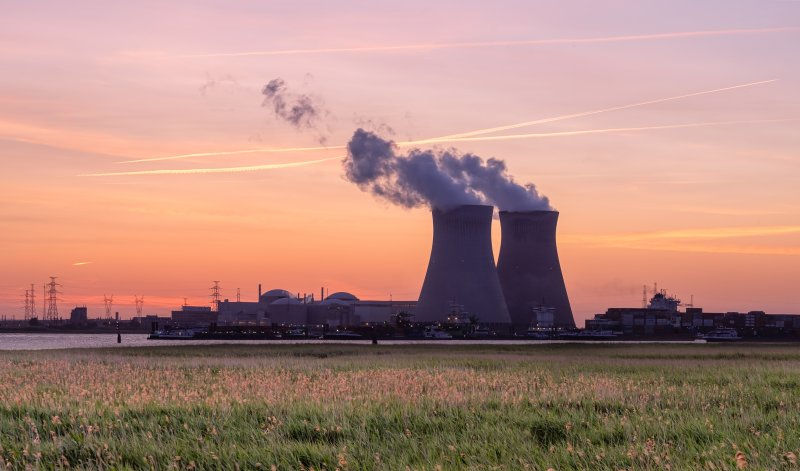
Experts shared information about small nuclear reactors versus large, and community concerns over radioactive waste during the May 4 Nuclear Feasibility Task Force meeting.
Kenya Stump, executive director for the Kentucky Office of Energy Policy, gave a report on Kentucky’s approach to acquiring nuclear energy, saying community outreach is necessary for success.
X-Energy, a company specializing in small modular reactors, is collaborating with Kentucky power companies to deploy its SMR unit that would produce 80 MWe, a unit measuring actual electricity available to consumers. X-Energy also has partnerships with Dow Chemical, Amazon and others to potentially produce 11 GW in energy, according to the company.
Stump said whatever nuclear-related facility may be planned, it’s important for communities to understand the process. Making sure a community is “nuclear ready” would also help facilitate the permitting process, which can be lengthy, she said.
“They must either pass a resolution or have a ballot initiative with community buy-in that shows acceptance,” she said. “They can designate fuel production, power production, supply chain manufacturing or back-end fuel waste management such as reprocessing or potentially hosting spent fuel storage facilities.”
Non-incorporated county communities would most likely be involved in the process, as opposed to cities, she said, but once approved, a community could apply for and pursue private-sector nuclear opportunities.
Following a recent outreach to six communities, Stump said the No. 1 issue among residents was the lack of a long-term solution for waste disposal from the federal government. “Communities were really uncomfortable with that,” she said.
Others were concerned with SMRs that could be terrorist targets.
Still, a major plus for the state, especially on the eastern side once dominated by the coal industry, is jobs.
And as more states become interested in the potential of nuclear energy, Stump said, she is concerned that the Nuclear Regulatory Commission could be overwhelmed with applications.
Mike Woosley of New Era Energy said having sites licensed and ready to go would help with the SMR permitting process. “I would allow two years for the whole process,” he said.
If interested in bringing a nuclear facility to the state, Woosley said officials need to send clear market signals that Delaware is open for business.
“Delaware needs to be loud and proud that they are welcoming for nuclear,” he said.
However, Woosley stopped short of endorsing what he called the fourth generation of nuclear energy production advanced by X-Energy, OKLO, NuScale and other SMR companies.
“I’d never recommend it for the state of Delaware because they still have to build their first unit, operate it, learn what design changes they want to make and then some,” he said.
In his opinion, he said, the Westinghouse AP1000 units – an example readily visible to Delaware residents when they look east to Salem County, N.J. – are proven, reliable technology.
Another option could be a GE Vernova Hitachi SMR that is currently under construction in Darlington, Canada, he said.
Nuclear energy expert Allison MacFarlane, professor with University of British Columbia and former chair of the U.S. Nuclear Regulatory Commission under the Obama administration, was disdainful of emerging SMR companies, referring to them as “nuke-bros.”
First, she said it’s cheaper to build one large pressure vessel than five small ones, and second, SMRs do not yet exist. MacFarlane said three units are currently being demonstrated – Kairos Power is constructing a Hermes reactor in Oak Ridge, Tenn.; a Natrium unit developed by TerraPower, founded by Bill Gates; and the unit under construction in Canada. “That’s it,” she said. “So we really don’t know a lot about these.”
The more the exotic the design, the more difficult the prediction of how it will operate, MacFarlane said. And then there’s the cost.
SMR company NuScale has spent about $23 billion since 2015, and in January 2024 laid off 30% of its staff, she said.
“This is rocket science. It is difficult,” she said.
And acquiring highly enriched uranium is going to be difficult, she said, particularly when the biggest supplier is Russia.
“Bottom line, I don’t think you’re going to see nuclear power as a growth industry for a while, and if you need energy sooner, you need to look elsewhere,” MacFarlane said.
Delaware’s Renewable Energy Portfolio Standards
Although it may seem like a politically toxic option in these days of soaring energy bills, one way to promote nuclear energy in Delaware could be offering nuclear power energy credits. They'd be similar to what consumers currently see on their bills for solar, wind and Bloom boxes – a natural gas, biogas or hydrogen- based method of energy production.
Delaware’s Renewable Energy Portfolio Standards mandated by law require a certain percentage of an electric supplier's energy portfolio to come from solar and other renewable energy sources – commonly referred to as renewable energy credits, RECs, or solar renewable energy credits, SRECs.
After lawmakers passed the Renewable Energy Portfolio Standards in 2005, the percentage of RECs required topped 10% in 2019. By 2021, lawmakers passed a bill increasing the percentage to 40% by 2035. For 2026, utility company Delmarva Power and Light will be required to get 25.5% of its energy from renewable energy sources, per state law.
Charges for solar, wind and Bloom boxes come directly from DPL customers through Alternative Compliance Payments – amounts that vary depending on electricity use, some climbing more than $40 a month extra on bills for some customers during last winter’s deep freeze.
According to state law, DPL is allowed to charge customers an alternative compliance payment when the price to purchase renewable energy rises as a way to cap prices.
“As a result, and as Delmarva Power works to keep bills for our customers as low as possible, rather than purchasing higher-priced RECs to meet the state obligation, Delmarva Power paid $14,370,700 for the 574,828 REC shortfall at the $25 ACP rate,” wrote DPL officials in answer to questions about ACP payments in 2025.
New Era Energy’s Woosley said while Delaware may be on track to meet its 25% state renewable energy mandate, meeting the 40% by 2035 could prove difficult.
This could open the possibility of Delaware offering a nuclear energy credit.
“Delaware could consider making nuclear generation creditable to RECs just like solar,” Woolsey said. “It would be simple and also novel; it would make you the first state to do this, because according to my information no other states have done this yet.”
However, he acknowledged that charging ratepayers, such as for nuclear construction costs, is “politically unpopular.”

